Steady She Goes – Forward Theater – Madison, Wisconsin
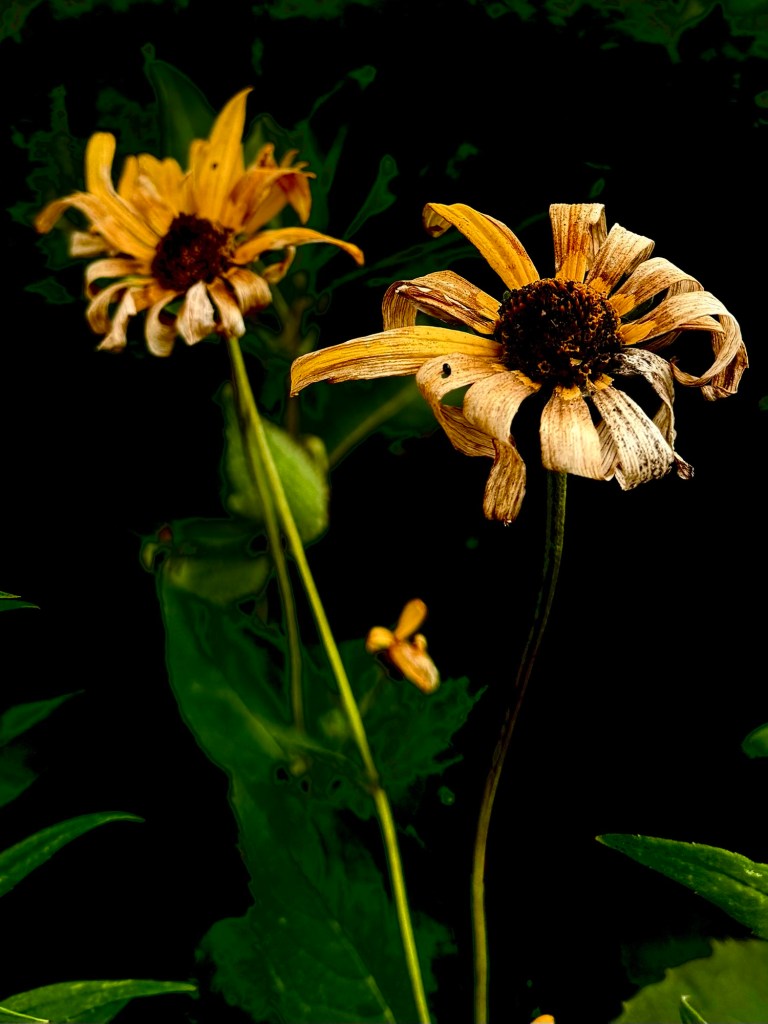
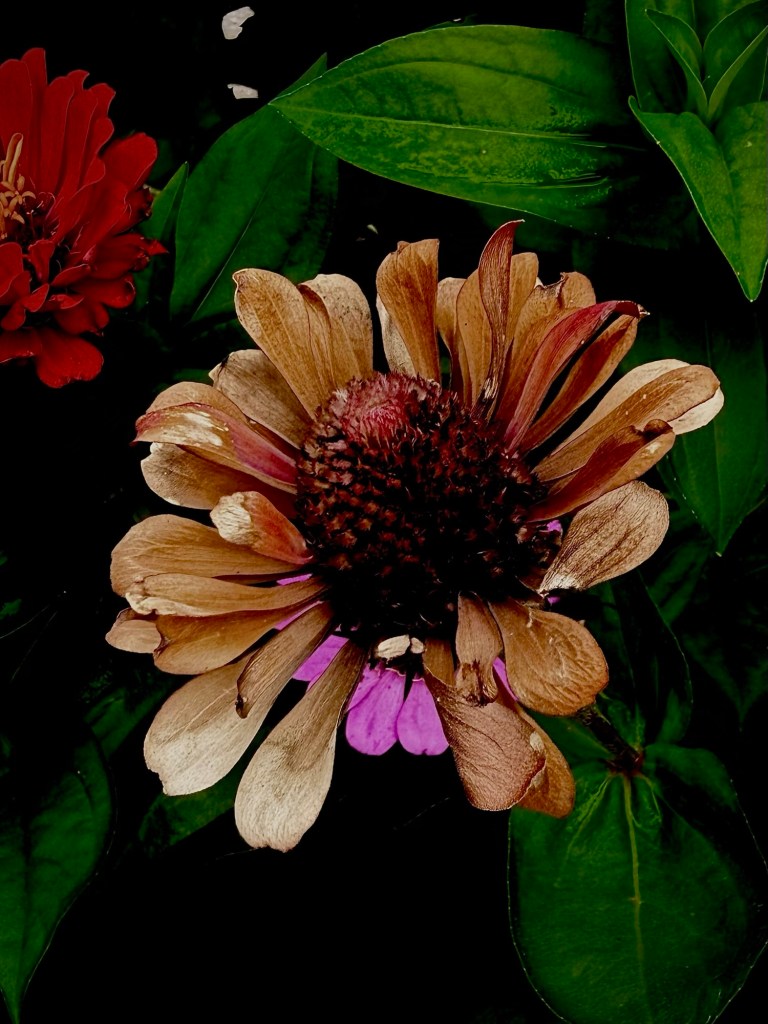
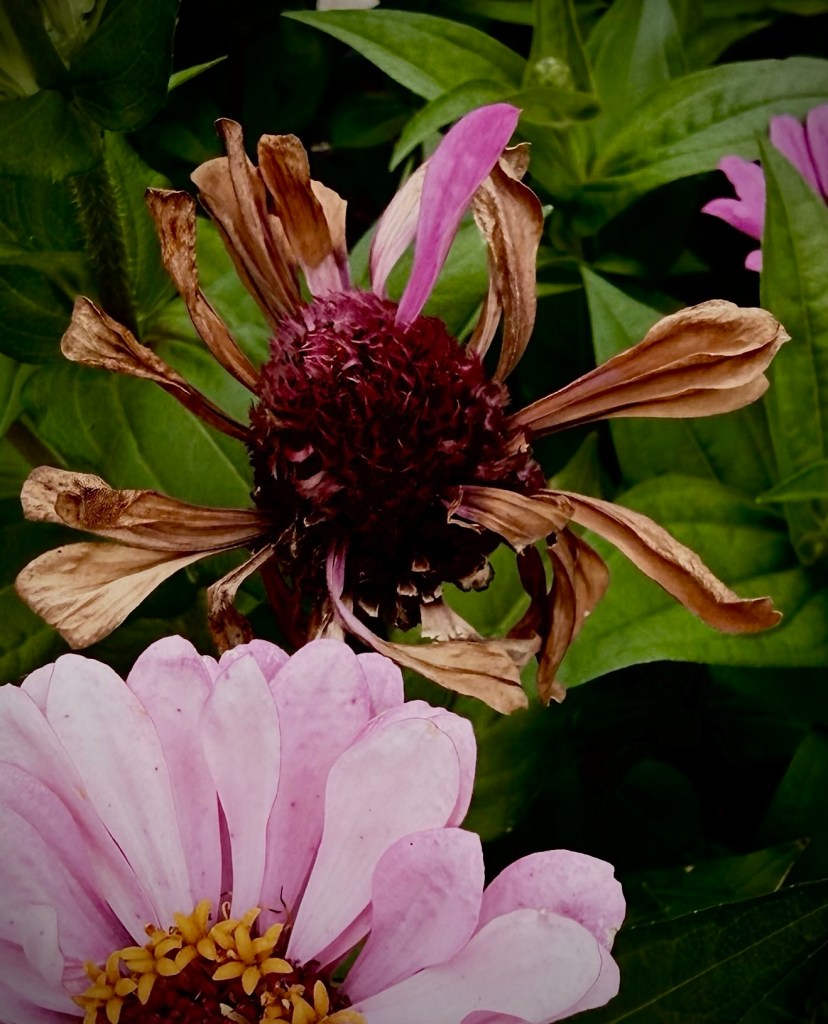
Rain has a rhythm. It taps against the windows, darkens the earth, bends the flowers low – and still the birds come, still the garden drinks, still the days unfold.
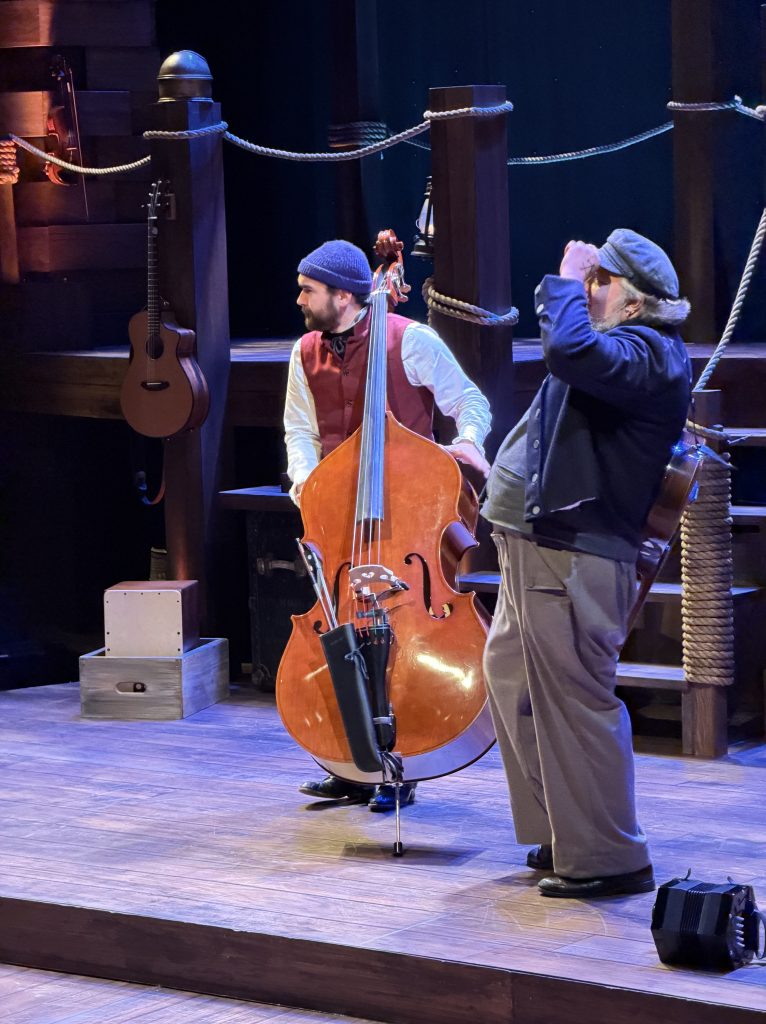
Last night, a ship sailed across the stage carried by flute and fiddle, violin, bass, and mandolin. Old stories finding new voices. Wood became music sharing memories again.
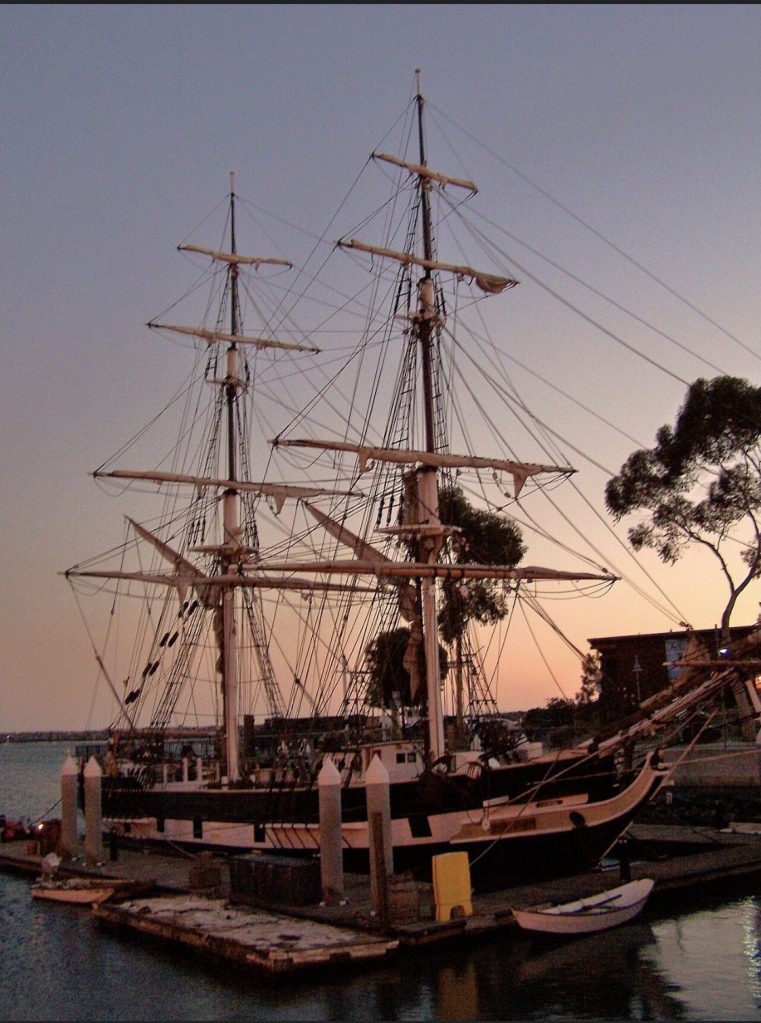
And I thought of another sailor, Richard Henry Dana, and his story, Two Days Before The Mast. Sharing tales of what he’d seen. Writing it down so the story would last.
Two stories came together this week. Different but so much the same. Stories of courage and strength carried forward each under a different name.
Replica of the Pilgrim II from Wikipedia
And, of course I ponder life.
We cannot hold the rain. The flowers will give way again. We cannot keep from growing old. We don’t command the wind.
But we can notice.
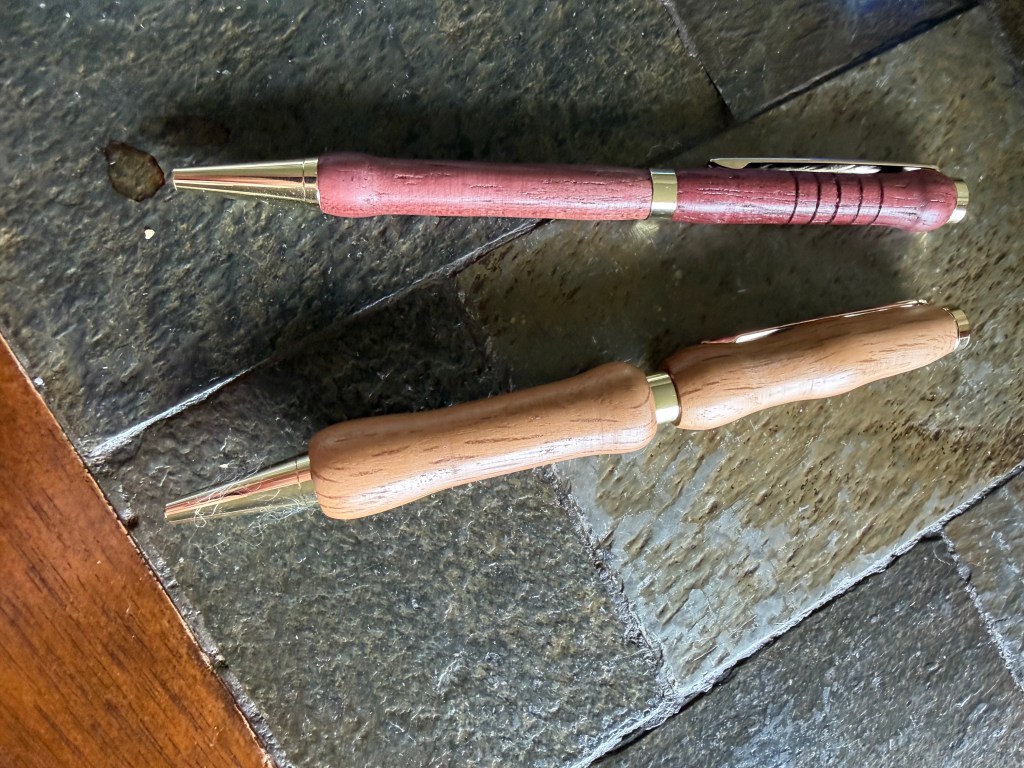
We can gather scraps of wood. Turn that wood into a pen. Then take that weathered wood and scratch words on paper holding time again.
Pens turned from wood scraps of the Pilgrim project.
The words will say ~
We happened. We were here. Words will persevere.
So let the rain fall. Let birthday candles burn. Let the sails fill with whatever winds, I’ll keep giving my pen a turn.
Steady she goes. Stay the course Keep writing. Keep the story alive. Someone will tell your story again.
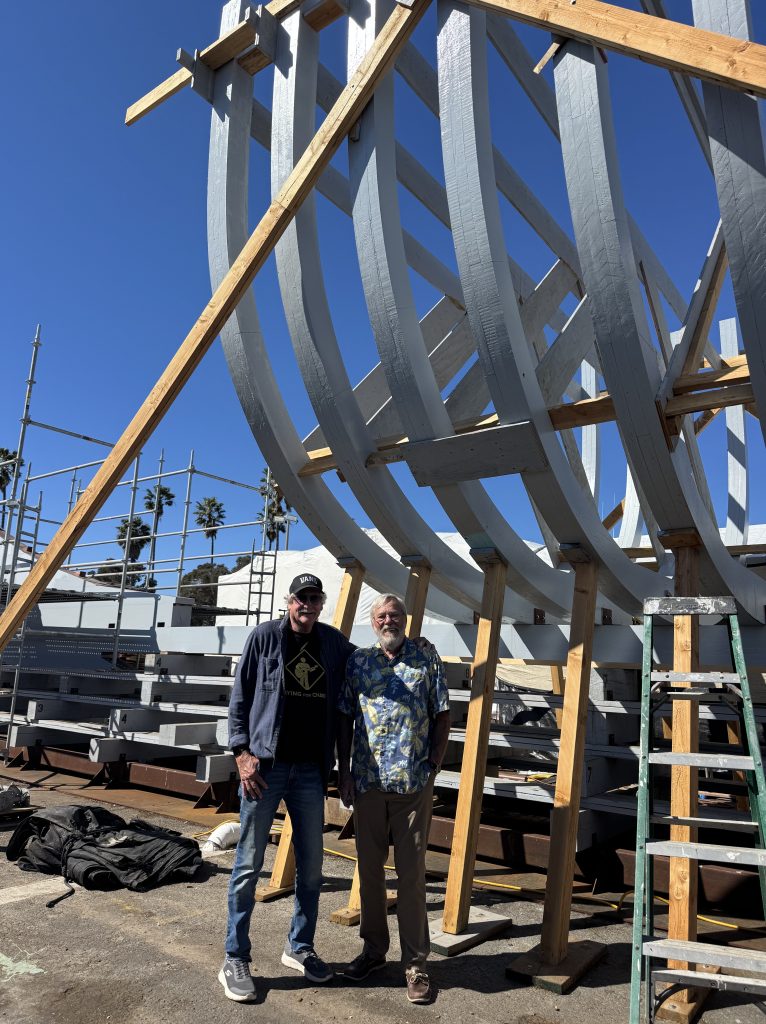
New replica to become Pilgrim III being built in San Diego.
I write to soothe my own worried mind, to gather thoughts that scatter when life feels uncertain, to find a way through the thorns.
I write to remind myself that life’s road is filled with beauty. Just look up now and then.
Stop studying every trip hazard. Notice, instead the birds rising, the scent of the ground after a rain.
I thought the words were mostly for me until yesterday.
I walked into one of the gift shops that sells our books and was told that someone had been brought to tears by the words.
Apparently, she needed a reminder too that the road is more than rough ground. That even after a storm, something might be waiting to be noticed if we just…
( Thank you, Gloria Steinem and Helen Reddy for showing me the way)
I was born in the 1950s—
A time when women were groomed to seek a husband, settle down, and have babies.
And while my mother tried to force this onto me, it was a life she had never wanted for herself.
She had dreamed of becoming a writer. She wanted an education, a different path, something more than what was expected of her. But in those days, higher education for women was often dismissed as nothing more than a way to earn an “MRS. degree”—a husband.
Her future had already been decided.
She was expected to follow the roles assigned to her: marry, keep a home, and have as many children as God would give her. And if she wasn’t engaged or married by her early twenties, she risked being labeled something far worse—
an “old maid.”
My Entrance
I came into my mother’s world after she’d had three full-term births and five miscarriages—
I was an unexpected fourth child, arriving too soon after my brother.
I entered her world screaming.
Maybe we both were screaming.
And so began our story—
two lives learning to navigate the vessels we had been given.
Our days were often marked by conflict.
She resented the role she had been handed. Somehow, I must have felt it—because I carried a version of that resentment within myself. I questioned everything. Tradition didn’t sit easily with me.
And while I questioned, she tried, fervently, to shape me into conformity.
I would later learn that the 1950s and 60’s were described as a “tumultuous era for women.” At the time, all I knew was that life between my mother and me felt unsettled—unsteady, like two boats pulling against the same current.
Now, I can imagine what I could not see then.
She may have resented my place in history—
Growing up in a time when doors were beginning to open for women in ways they never had for her.
And so, in different ways, we were both fighting for control.
Never Fond Of Water
One of my earliest memories of water isn’t my own, but a story my mother told—of nearly drowning in the Wisconsin River.
The fear stayed with her.
And because it stayed with her, it shaped me.
I was kept far from water. Swim lessons didn’t come until my early teens, and even then, they were granted with hesitation. By that point, I was already behind—awkward and self-conscious among peers who moved through water with ease. I never found comfort there.
So, swimming not being a strength, the idea of sailing on open water—with its depth, so unpredictable, I still quiver.
And yet, symbolically, it feels, somehow, right to use a ship as my first metaphor because water holds everything I’ve come to understand about life—uncertainty, movement, surrender, strength, and fear.
So this is where I begin:
“To sail a boat is to negotiate a life.”
(Richard Bode, 1993)
Setting Sail
I had been trained to follow tradition: how to be a woman of the 1950s.
Cleaning.
Cooking.
Childcare.
Those were my tools.
So how did I become a sailor in the late 1960s? Lost at sea without a navigation plan. What was I doing out there? I didn’t know how to sail! No one had taught me to chart a course, to read the winds, or to take the helm.
Television, which was a relatively new addition to living rooms, reinforced old traditions. Shows like Father Knows Best and Leave It to Beaver painted a clear picture of a woman’s place in the home—often in the kitchen, dressed neatly, apron tied, life contained.
My mother had lived that life.
And she resented it.
She carried her anger, and at times, it landed on us—most times on me. Whether I understood it or not, I knew one thing clearly:
I needed to leave!
So I got on a boat—
scared, unprepared, yet determined.
And sailed off… to college.
The timing, somehow, worked in my favor. My father had passed away, and Social Security benefits made college financially possible. Dormitories made it socially acceptable—safe, contained spaces where young women could live independently, but still within boundaries.
My mother resisted in every way she knew how.
But she couldn’t stop me.
With my high school graduation gifts still in their boxes, I set up my first dorm room like a rookie sailor preparing for a journey: a clock radio, a portable hair dryer, a typewriter, and a three-piece luggage set holding everything I owned.
No dresses.
I was ready.
Or at least, I thought I was.
Learning the Waters
My roommate was a senior—the floor monitor—who felt she’d earned a room of her own. Instead, she got me.
She wasn’t happy.
She was also a smoker. I wasn’t—until I decided to be. That summer, I had picked up the habit, trying on the identity of a “liberated” woman of the 1970s. My cigarette of choice? Virginia Slims, with their bold message:
“You’ve Come A Long Way, Baby.”
Maybe I hadn’t—but I was trying.
It made me more tolerable to her.
Still, she kept her distance.
I remember her laughing as I carefully read the instructions to set my alarm clock—proof, perhaps, of just how unprepared I was for this new world.
Back home, my mother had little faith in this path. Raised by parents who didn’t see the need for girls to finish high school, she saw college as pointless.
“You’re just going to find some guy and get married anyway.”
The truth? I didn’t have a destination in mind.
I thought I’d figure it out as I sailed.
And eventually… I did.
Rough Seas
There were early signs that this journey wouldn’t be smooth.
My first semester hit like a storm—too many assignments, too many expectations, and one overwhelming failure: Math.
I didn’t even know I could drop the class.
When I asked for help, my instructor laughed.
“If you think this is hard, it only gets worse.”
So I stopped going.
That earned me an “F.”
But something in me refused to accept that ending.
I retook the class—this time pushing back against every message that told me girls weren’t good at math. I worked harder, studied longer, and proved something to myself.
By the end, I had earned a solid A.
No final exam required.
Silenced
Another lesson came in an English Literature class.
We were studying poetry. I raised my hand, confident, and read a short poem aloud. I offered what seemed to me a simple interpretation—that it reflected a baby’s innocence.
The professor, with what felt like venom spraying out of his mouth, shouted back:
“This poem is clearly about a woman—her weakness—It’s obvious! Do you not see the exclamation points at the end of each line?
Humiliated, I felt myself shrink.
After that, I stopped speaking up—not just in that class, but in others as well.
At the time, I didn’t fully understand what I had encountered. Women were beginning to step into spaces long held by men. The reaction to that shift was not always welcomed.
Looking back, I see it more clearly.
That moment was a lesson in power—
and in silence.
Refusing to Sink
By then, my boat was taking on water.
Deadlines, tests, confusion, embarrassment—it all came at once. Around me, the world was shifting: Vietnam War protests, Women’s Liberation Movements, voices rising everywhere.
And there I was—seasick, uncertain, trying to stay afloat in a world that seemed to make sense to everyone but me.
At the end of my freshman year, one thing kept me from quitting:
I refused to prove my mother right.
Somewhere near the end of my sophomore year, something shifted.
A quiet realization:
If I wanted to sail,
I had to take control.
Find a map.
Chart a course.
Steer the boat myself.
Calmer Waters
With that shift came something new—
a sense of direction.
The waters didn’t become perfectly calm, but they steadied. I found small pockets of peace—coffee shops, folk music, quiet moments of reflection. I became, in some ways, a quieter version of the era’s “flower child.”
Still, contradictions remained.
I had a boyfriend who encouraged independence—
as long as it didn’t take me too far from him.
I was caught between two worlds:
Be strong.
But not too strong.
Depend on yourself.
But stay dependent.
And so, the push and pull continued.
The Questions
Looking back, I asked myself:
Would it have been safer to stay on the shore—
where my mother said I belonged?
Should I have started smaller—
a quieter path, calmer waters?
Was I naive to believe the winds would guide me where I needed to go?
The answer, again and again, was simple:
Maybe.
Because sailing doesn’t guarantee direction.
Storms appear without warning.
Courses shift.
You find yourself on unfamiliar shores, wondering how you got there.
And in those moments, I could still hear her voice:
“I told you this would happen.”
Still Sailing
But this much was certain:
To sail was my choice.
To keep sailing was my necessity.
Again and again, I would push off from shore.
And somewhere along the way, I found an anthem—one that gave voice to what I was becoming:
I Am Woman. Hear Me Roar
Helen Reddy, 1972
The words of Helen Reddy carried me forward—not as a declaration of certainty, but as a promise I was still growing into.
Strength.
Wisdom.
Resilience.
Not given—
but earned.
Thank You to the Powerful Women
There have been many. Trailblazing a way for me, for my daughters, for my granddaughters. We have fought our way into positions of recognition and power. Yet, we still have such a long way to go.
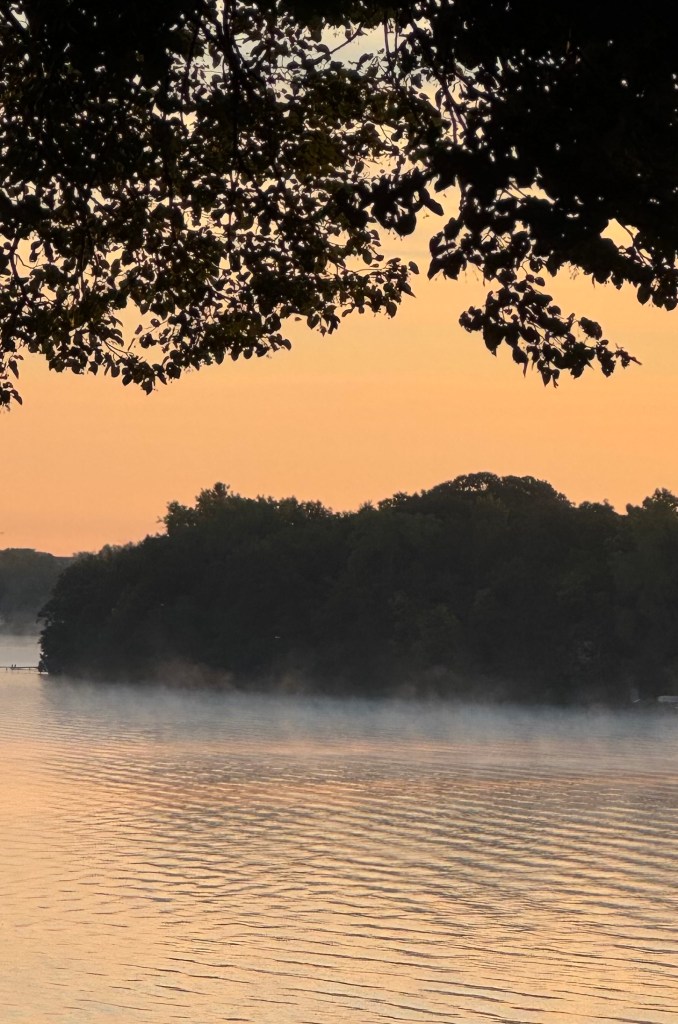
When I first looked out the window this morning, the lake had disappeared.
Fog rested gently on the water while, to the east, the rising sun painted the sky with soft hints of rose. Rays of light slipped through the trees, but across the lake, the shoreline was impossible to see.
Split realities.
Light and fog.
Certainty and uncertainty.
Standing there with my coffee, I couldn’t help thinking how much that morning looked like life itself.
Then I remembered.
Today is my golden anniversary.
Three years on the third.
Three years alcohol-free.
When people hear “three years,” they often imagine a dramatic turning point. Mine wasn’t dramatic at all. I began with a simple promise to myself.
I had spent years wishing I could be the person who enjoyed one glass of wine before bed.
I wasn’t her.
One glass became another.
Then another.
Eventually, I stopped wishing I were someone else and accepted who I was and stopped drinking altogether.
That acceptance changed everything.
Not overnight.
One day at a time.
One sunrise at a time.
Today, looking back, I don’t spend much time thinking about what I gave up.
I think about what I gained.
I gained mornings.
I gained peace.
I discovered that words were waiting for me before the rest of the world woke up.
Over these past three years, those quiet mornings filled journals.
Those journals became poems.
Some poems became songs.
Those songs found their way into books.
Now, together with a friend, we have built Tranquil Resources — a place where photography, music, and words come together in hopes of helping someone else slow down, breathe, and notice beauty.
One of the biggest surprises?
I didn’t need alcohol to be creative.
I had believed that for years.
Instead, I found that creativity had been patiently waiting beneath the noise.
When I stopped numbing my life, I started noticing it.
I noticed baby ducks taking impossible steps.
Morning fog drifting across the lake.
The sound of sandhill cranes.
The way sunlight filters through oak trees.
The beauty had always been there.
Now I was finally present enough to see it.
As I stood looking out the window this morning, something else happened.
The fog began to lift.
Slowly, the shoreline appeared exactly where it had always been.
It hadn’t disappeared.
I simply couldn’t see it for a while.
Maybe hope works that way.
Maybe purpose does too.
Maybe the life we’re searching for isn’t gone at all.
Maybe it’s simply waiting beyond the fog until we’re ready to walk toward it.
Three years ago, I promised myself I would choose life.
Not perfection.
Not certainty.
Just the next right thing.
Today, I’m healthier.
Stronger.
Far more hopeful.
And perhaps for the first time in my life, I’m no longer afraid to let people see what I’ve created.
that may be the greatest gift of these past three years.
Not sobriety.
Freedom.
Freedom to write.
Freedom to create.
Freedom to become the person I was quietly meant to be all along.
So today I’m celebrating out loud.
Not because my journey is finished.
But because this ordinary Monday morning reminded me how extraordinary an ordinary life can become.
If you’re standing in your own fog today, wondering if the shoreline will ever come back into view, let me leave you with this:
Keep walking.
The light is already rising.
You just may not be able to see the shore yet.
Three years ago I made myself a promise.
Today, I celebrate the life that promise made possible.
For years, I believed I was not good enough.I don’t believe that anymore. Now I believe I’m just one brave step away from who I was always meant to become.
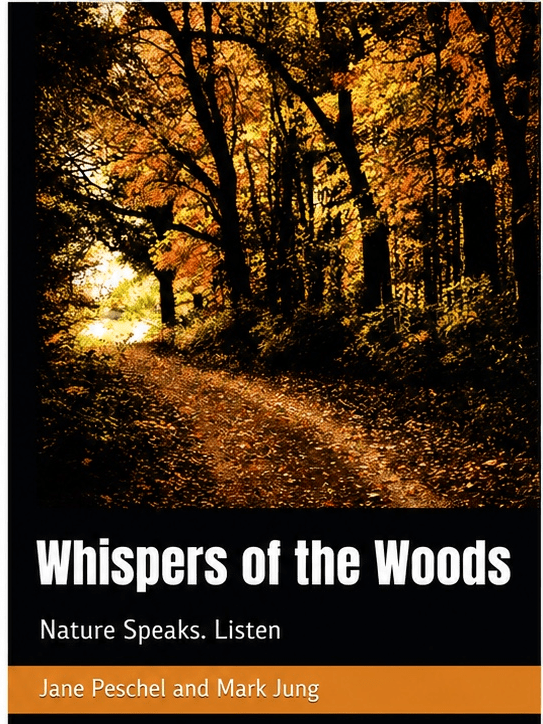
Sometimes the woods whisper. Not with words, but with birdsong, morning mist, golden light filtering through the trees,
and the quiet reminder that we don’t have to hurry through life.
Whispers of the Woods was created for anyone who has ever found peace on a nature trail, paused to watch sunlight dance through the leaves, or felt their shoulders relax the moment they stepped beneath a canopy of trees.
Inside you’ll find nature photography, reflective poetry, and original music that can be experienced through QR codes woven throughout the book.
It’s an invitation to slow down. To breathe. To notice. To remember that some of life’s greatest conversations happen when the world grows quiet.
Where is the place in nature that quiets your soul?
Explore Whispers of the Woods and the rest of our collection at