While I get to step away from the harshness of our times—if only briefly—people in Minneapolis keep fighting. They keep grieving. They keep demanding to be heard.
ICE OUT.
Two people in their state are dead. Their deaths came while peacefully protesting. Videos run nonstop from multiple angles. Look. Believe your eyes.
The lies pour out of the mouths of these so-called “agents” like water—easy, uninhibited, flowing free. Spin created on the spot, delivered with confidence. How do people lie so effortlessly? And with such conviction?
Meanwhile, thousands gather day after freezing day, standing in bitter cold, calling out: “Bullshit.” They’re told to keep recording. Keep sharing the videos. Let truth burn a hole through the sewage of lies.
We are not domestic terrorists because we stand up for democracy. We are not inciting violence because we carry cameras and whistles.
And yet—alongside all of this—there is the Monks’ Walk for Peace.
The contrast is stark. Like a Minnesota winter against the sunshine of California. Both exist at the same time. The question is simple: Which state do we choose to live in?
The Monks’ message is simple too. Let everyone live. Be compassion. Be love. Open your hearts to kindness. Make room for one another.
People gather along the roads as the monks pass—praying, walking with them for a while, wanting to warm themselves in the light of their message. Now the monks have stepped into ice and cold, but the message does not change.
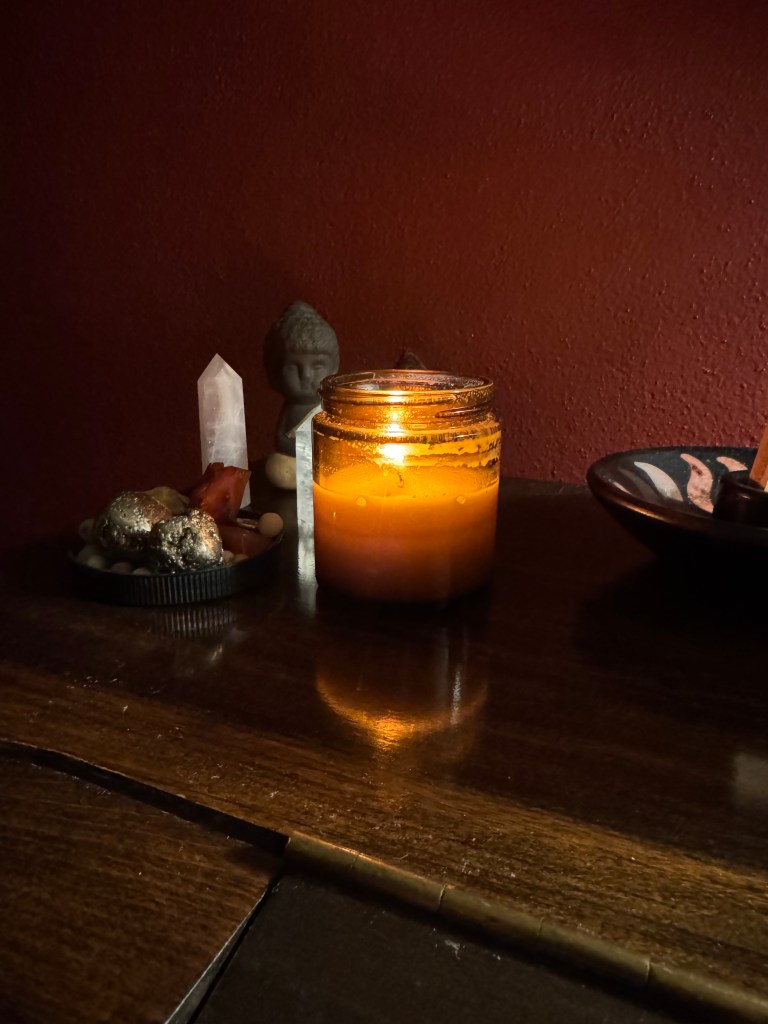
It flickers like a candle—steady, persistent—showing a way out of the darkness.
Light a candle. One candle becomes many. Many become a torch. A torch becomes a blaze.
This light can burn through the darkness. It can show a way out of this night of terror.
Truth is our torch in the night.
Walk with the monks. Light a candle. Join their growing flicker of light.
Love is not passive—it is resistance.
Stand with Minnesota. Hold that candle high. Rise up with love and light.
Drown out the flood of lies. Flood the world instead—with kindness, with truth, with moments of light.
My heart pounds. My eyes cry. I have grandchildren who expect to grow up in a safe world. They deserve that. We promise them that.
But right now, in Minneapolis, that promise feels fragile—shaken by ongoing violence involving federal agents and civilians. In just the past few weeks, federal immigration agents have shot and killed at least two people during operations in the city, including a 37-year-old man in south Minneapolis this Saturday..
These are agents supposedly sent to “keep the streets safe.” Yet people are dying on those streets. Homes surrounded. Doors broken in. Protests rising. Tear gas deployed. Tensions flaring.
America is at war with itself.
I see masked agents armed with weapons. I see people in the streets trying to protect their communities. I see Fear. Grief. Anger.
How did we get here? What kind of anger drives people to strike before they listen? What hunger for power requires another’s suffering?
And so I turn to the Monks’ Walk for Peace. I want to walk with them. Their message of compassion and love is where I find my calm. Still, I struggle. How does one remain compassionate now? How do I walk in quiet love yet insist on accountability for violence?
I want peace returned to this country I love— not the absence of struggle, but the presence of justice, dignity, and safety for all.
I want my grandchildren to grow up in a world where leaders protect life, not devalue it. Where disagreement does not turn into violence. Where service means safety for everyone, not fear for some.
This feels like a turning point. Democracy itself is at stake. Republicans have the power to stop this right now, and I am pleading with them to do so—before our country is pushed further toward fascism.
For now, I light a candle for Minnesota. And for our country. And I pray.
I watched bits of the news yesterday. It’s too overwhelming and chaotic to fully absorb. The list of crises is long and exhausting. Every single one demands my attention. They require my care. I pledge allegiance to the side I want to see prevail.
Minneapolis has been a battleground for weeks now. Created by our president. Can you believe that? His soldiers—ICE agents—breaking down doors, slamming into cars, pulling people out of homes and streets, and tear-gassing others directly in the face with no regard for injury. Where does this level of vile anger come from? What fuels such deep-seated fear of other humans that it turns into a desire to destroy them?
At the same time, I am trying to read The Book of Forgiving by Desmond Tutu and his daughter, Mpho. In it, I’m being asked to understand that no matter the act—or the depth of pain inflicted—you must seek forgiveness. I’ll be honest: I want to put conditions on that. But conditions aren’t part of these teachings. Conditions keep us bound inside the conflict. So somehow, I’m being asked to understand where the hatred comes from.
The hate came from somewhere.
Were these men raised in poverty? Taken advantage of by past government systems? Wait—are they feeling emasculated? Men deprived of strength, vigor, and control? Have we weakened men, made them feel less than? Stripped them of confidence, power, and authority?
Bear with me.
Last night, we watched A League of Their Own—a movie about women forming baseball teams while men were away fighting World War II. The women became good at baseball. Very good. But when the war ended and husbands returned, they were expected to go back home—to be housewives again.
There’s a scene in a dance hall during a night away from the game. It reminded me of my mom. She grew up in a dance hall and loved the atmosphere. Loved to dance. Was good at it. But when she came of age, she married—because that, too, was her dream. Dancing was replaced by cooking, laundry, raising kids, and feeding chickens. Dance became something she only touched in rare, brief moments.
She became angry.
She spent her days screaming at a life she hadn’t wanted. Hated it. Took it out on her kids. The female version of emasculation—a microcosm of a larger system. She had wanted more.
Fast forward.
My generation took the reins. We called it feminism. We said we didn’t want to be controlled anymore. We wanted careers like men. Freedom to make choices about our lives, our bodies. We entered male-dominated spaces, became good at those roles, took their jobs—and then added insult to injury by demanding shared parenting, shared household labor, and sometimes asking men to become homemakers.
Some men welcomed this shift. Others did not.
“Get back in your place,” they screamed.
My brother warned me once: “Don’t make more money than your husband. It will hurt his ego.”
In Minneapolis, one woman blocked the path of an ICE agent. He ordered her out of her car. She said, “Hey dude, I’m not mad at you.” He screamed again, “Get out of the fucking car.” Then he drew his gun. As she tried to escape, he shot her three times. As he walked away, he called back, “Fucking bitch.”
Emasculation?
Our president wants to be seen as all-powerful. In control. Confident that people listen to him—and only him. He wants to be called strong. Dubbed the greatest peacemaker. Some people are feeding his ego. In return, he rewards them—funding projects, granting favors, letting them live in peace.
So, Desmond Tutu—if forgiveness begins with understanding, I’m trying to do that part. But how do I take the next step? For me to forgive this hate-filled supremacy gripping our country right now, must I surrender my freedom? Would I need to relinquish my strength? Must I give up my power?
Maybe forgiveness isn’t absolution or reconciliation. Maybe it looks more like refusing to become what I oppose. Maybe it means holding my ground—clear-eyed, steady, unwilling to excuse violence or cruelty—while still resisting the pull toward hatred myself. I need to seek to understand without surrendering my voice. I need to stay open without laying down my strength.
If forgiveness is a journey, then today I am still walking. I am angry at times and grieving often. Yet, I am determined to stay human in a moment that keeps asking me not to be.
Yesterday, we stood in protest. We stood because an attempted takeover of democracy—fueled by hatred and power over others—is not the country we want to be. It is not the story we choose to tell about ourselves.
Today, the sky is hazy. The air feels heavy with questions that have no easy answers. Tension hums beneath everything, like a low, constant vibration.
And I feel guilty.
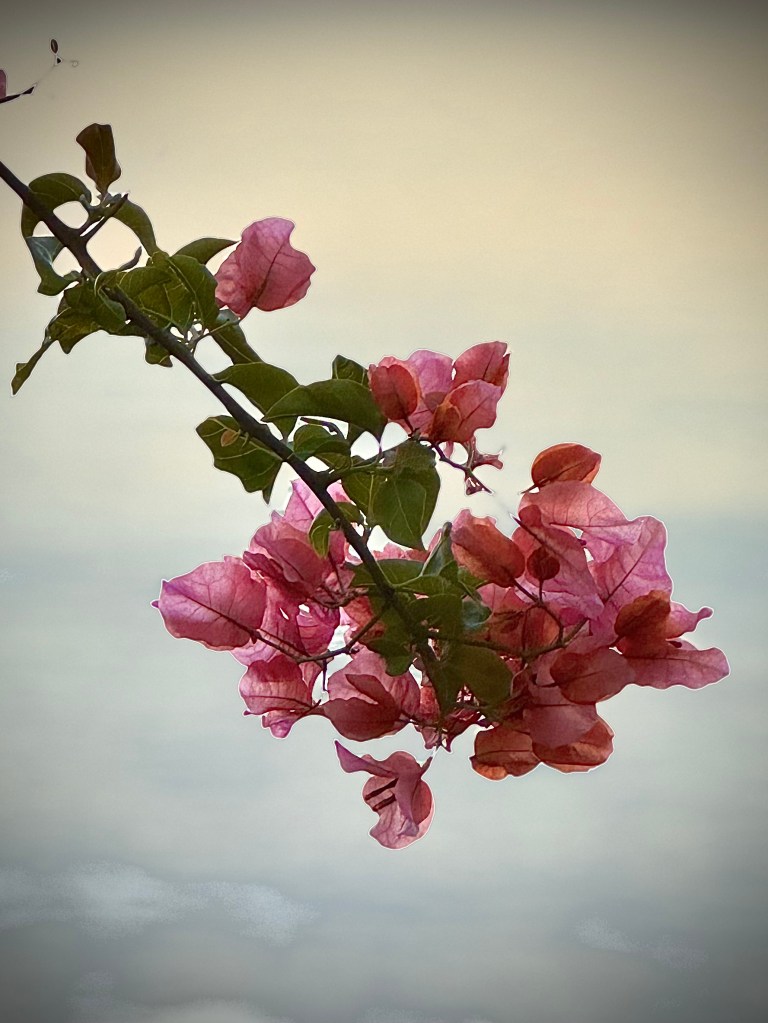
Guilty for sitting in a place where richness surrounds me— in flowers and birds, in air scented with eucalyptus and lavender and lemons, where people pass by with their dogs, simply going about their day.
The ocean keeps its rhythm. Waves roll in, then pull back again. High tide. Low tide. A steady, ancient consistency in an otherwise tumultuous time.
Across the country, a Peace March continues. A group of monks walking every day now passing through North Carolina, making their way toward Washington, DC, with a single intention: to spread the message of peace.
Their march is not loud. They simply walk.
And as they pass, crowds form— people drawn to their message. They offer the monks flowers and thank them for their presence. For their quiet courage of putting one foot in front of the other, day after day. It’s disorienting—this contrast between the beauty of the moment and the weight of the world. Between the urgency to resist and the quiet message of peace. But somehow both need to exist right now.
It’s in all of these thoughts that my resolve is replenished. Where I remember what we are trying to protect. Not just systems and structures—but mornings like this, shared air, ordinary walks, the right to move freely and live gently.
The monks walk. The tides turn. The work continues.
Nothing stays fixed forever. And yet, some things endure.
Today, I sit in the in-between— holding grief and gratitude, anger and awe, watching the waves, reminding myself, again, to believe that peace is not passive— it is practiced.
“Darkness cannot drive out darkness. Only light can do that. Hatred cannot drive out hatred. Only love can do that.” — Martin Luther King Jr. 1963
This quote feels especially appropriate today—especially this day.
We seem to be living in a time when darkness is being answered with more darkness. When outrage feels justified. When anger travels faster than understanding. And yet, Dr. King reminds us that the tools we instinctively reach for are not the ones that actually heal.
Light is quieter than darkness. Love is slower than hatred. Both require intention.
Choosing light does not mean ignoring injustice. It does not mean silence or passivity. It means refusing to let cruelty shape who we become. It means responding with clarity instead of contempt, courage instead of bitterness, humanity instead of fear.
Love, in this sense, is not sentimental. It is disciplined. It is brave. It is the daily decision to see one another as more than a label, more than an enemy.
On this Martin Luther King Jr. Day, may we remember that progress comes when ordinary people choose to be bearers of light— in their words, their actions, and their willingness to stay human in inhuman times.
Windows wide open Skies pure blue. It’s January And I’m doing winter The way I want to do.
There will be walks Sometimes on the beach But among the flowers and butterflies Within easy reach.
Windows wide open Smell of citrus fills the air. Back home the temperature plunges But I don’t care I’m not there.
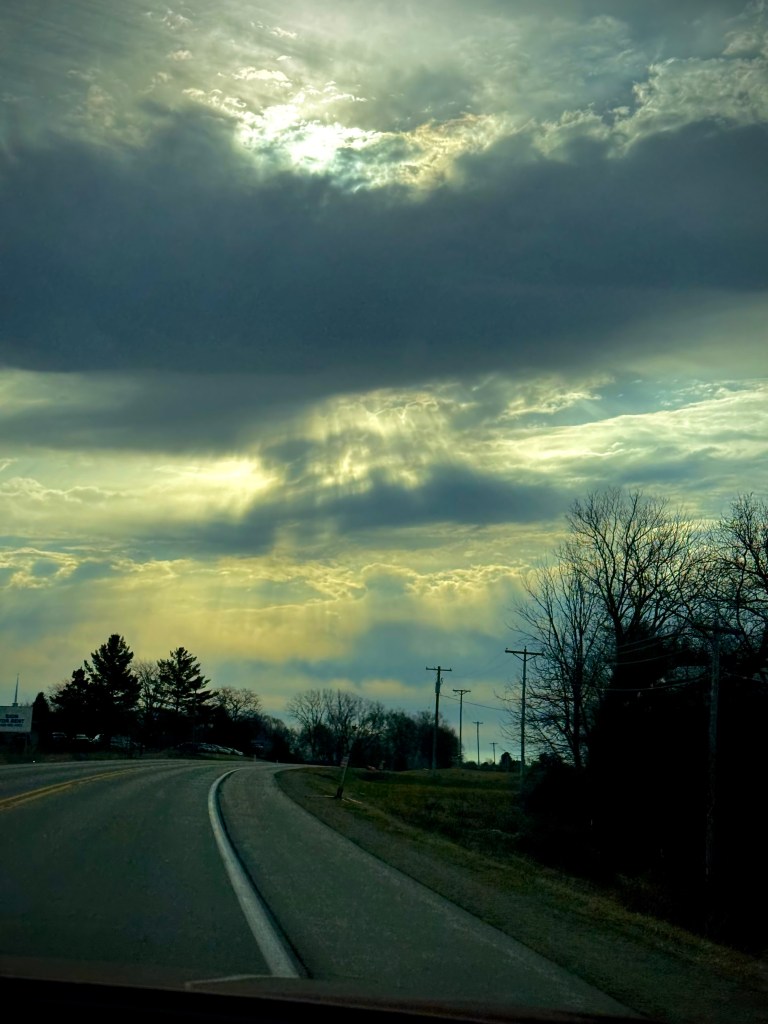
Today, we check in To the place we get to stay. The road trip was fun We saw so much along the way.
But I’m ready, now To stop living in the car. Wearing the same two outfits Creating lunches with apple slices And Granola bars.
Window wide open. Miles traveled, time to think. Freedom is not free these days. Our country on the brink
But these two aging hippies Protested plenty in our day. Viet Nam and Women’s Rights The length of hair and skirts. Battling government and our parents Demanding freedom till it hurt.
Windows wide open So while we can still stand, We’ll use our freedom To cross over frozen land Away from cold and frozen snow
Windows wide open In the winter of our life We’ll go to a place Where flowers can grow
There are moments when words aren’t meant to stand alone. They’re meant to sit beside sound. To rest inside melody. To breathe with music.
This song is meant to be played slowly.
It carries the idea of serendipity — the gift of finding something valuable that you weren’t searching for. The quiet wisdom of happy accidents. The grace that shows up when you stop trying to control the way forward.
We’re about to take a journey we’re calling Road Bathing. Eight days to do what usually takes four. No tight plans. No checklist of must-sees. Just miles, pauses, and the willingness to notice what appears.
That’s where serendipity lives.
In the unexpected roadside pull-off. In the conversation that lingers longer than planned. In the moment you realize you don’t need to arrive quickly to feel like you’re already where you belong.
This song was created for those moments — when you let go of urgency, when you leave space around you, when you allow the road to offer something back.
So if you can, pause here. Let the music wash over you the way miles do under open sky.
You don’t need to do anything. You don’t need to know where you’re going next.
Just listen. Just notice.
Sometimes, the most memorable parts of the journey are the ones we never planned.




 Tranquil Resources